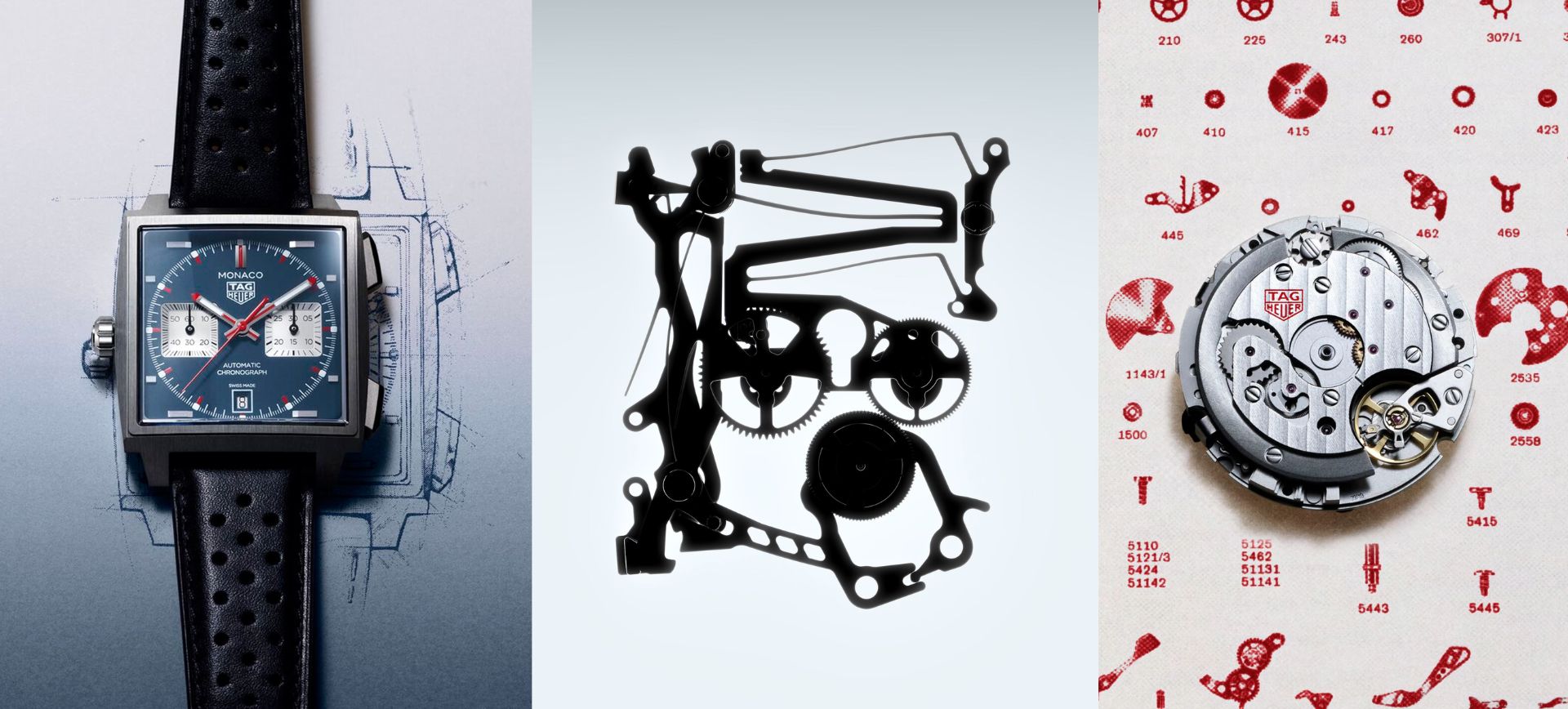
The 2026 TAG Heuer Monaco collection marks a bold return to the iconic design language of the original Ref. 1133, combining vintage-inspired aesthetics with modern engineering. From the redesigned Monaco Chronograph with its sharper case profile and upgraded TH20-11 movement, to the technically groundbreaking Monaco Evergraph featuring the new TH80-00 movement, Evergraph mechanism, and TH-Carbonspring oscillator, the collection showcases TAG Heuer’s strongest blend of heritage and innovation in years.
To appreciate what TAG Heuer has done with the 2026 Monaco, you need to understand the history of the collection. The most celebrated expression is the Ref. 1133 from the late 1960s and early 1970s — the original model that achieved cult status, in large part due to its association with Steve McQueen and the film Le Mans. That version had a short production run before being revived in the late 1990s, but with softer, rounder proportions that divided opinion among purists. The 2026 update returns firmly to the design language of the 1133.
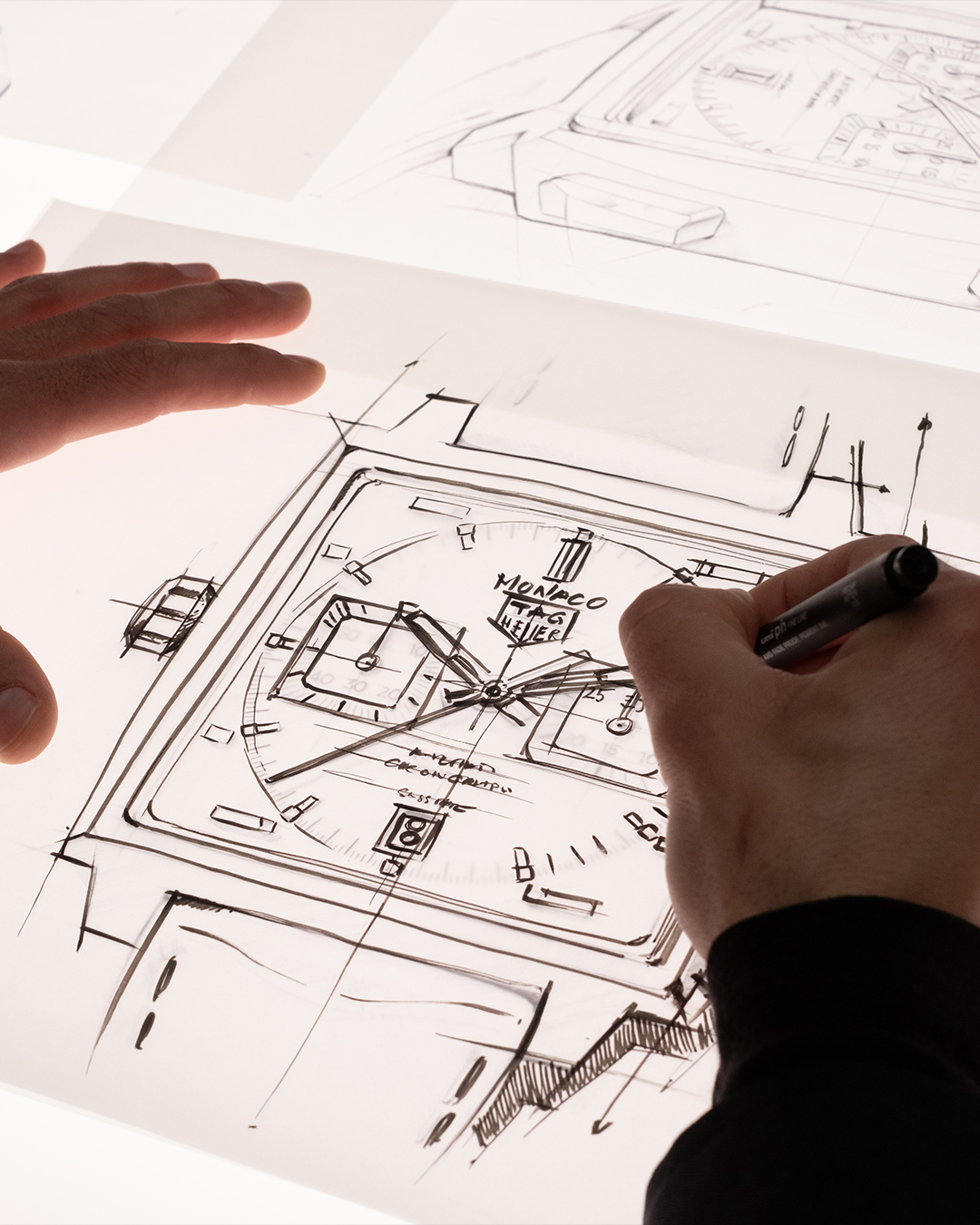
In practical terms, the dial and sapphire crystal now have a sharper, more pronounced square shape. This has been achieved through the addition of a slim lip around the edge of the display — too low to call a traditional bezel, but enough to reintroduce the crispness of the original. The case sides remain curved but with a shallower arc, giving the overall silhouette a more angular feel. The crown also returns to its original position at 9 o'clock, as it was on the 1133.
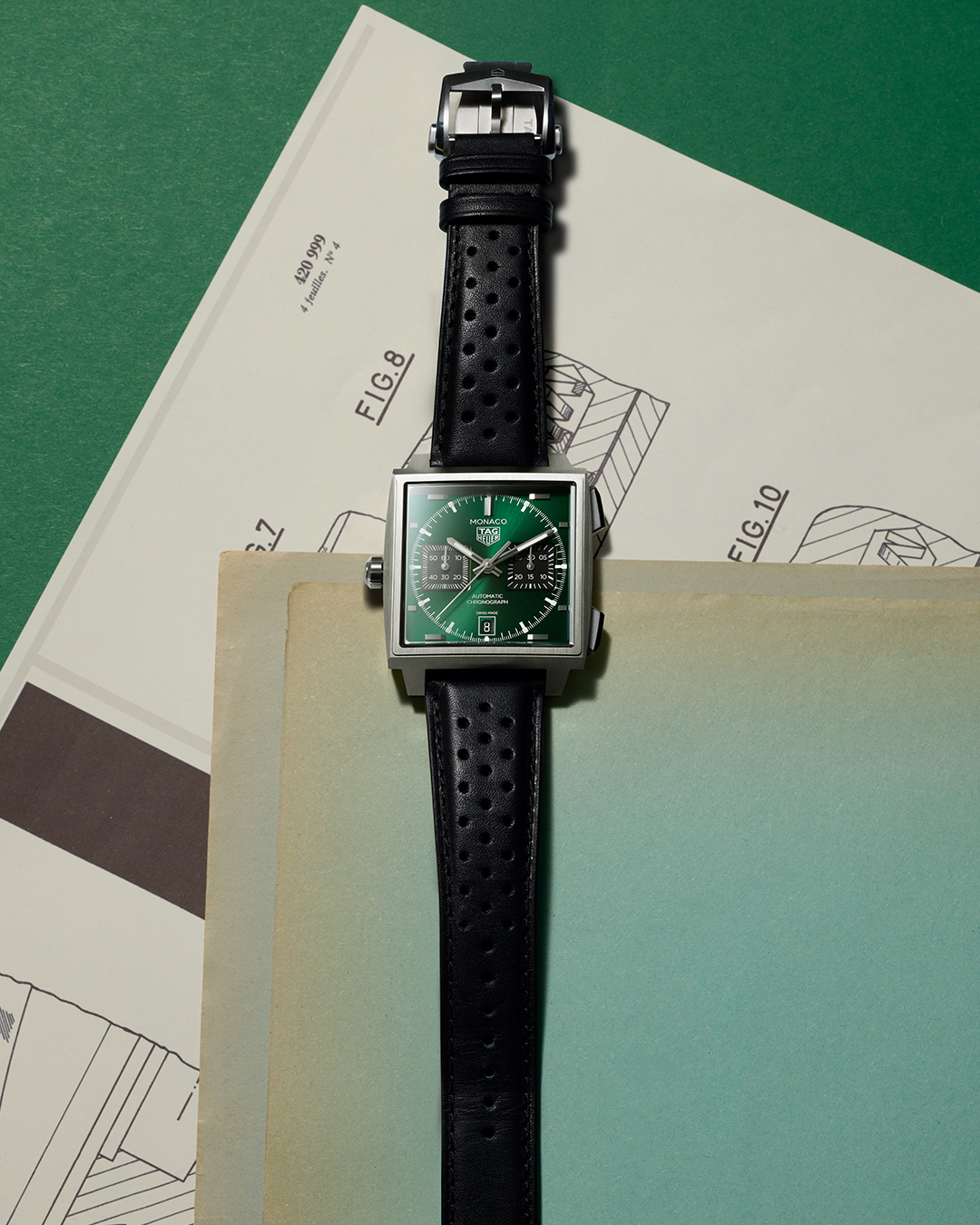
Three dial versions are being offered. The first is the classic blue, red and white combination inspired directly by the watch McQueen wore on screen. The second is a sunray-brushed green with black subdials. The third is a reverse panda presented on a bi-metal case in grade 5 titanium with 18ct rose gold plating — the sharpness of the new case shape is most visible on this version.
All three share the same horizontal hour markers of varying lengths across the dial — a key detail carried over directly from the 1133 and an element that gives the dial its distinctive, period-correct character.
Movement: Calibre TH20-11
Powering the new Monaco Chronograph is the TH20-11, the latest generation of the TH20-00. The core specifications remain strong — 80-hour power reserve, automatic winding — but the layout of the subdials has been rethought. The 12-hour counter that featured on the previous generation has been removed entirely. In its place, the watch adopts a bi-compax layout: small seconds at 9 o'clock, a 30-minute counter at 3 o'clock, and a date window at 6 o'clock.
This is a meaningful improvement. The previous model had the date window overlapping with the small seconds, which was a long-standing complaint among collectors. The new arrangement resolves this cleanly and, appropriately, mirrors the layout of the original 1133.

If the standard Monaco revamp is about design heritage, the Evergraph is about engineering ambition. It introduces two significant technical innovations simultaneously: the Evergraph chronograph mechanism and the TH-Carbonspring oscillator. Both appear together in the new TH80-00 movement, and this is the first time the Carbonspring has been used in a non-limited, standard collection watch.
The Evergraph Mechanism
Traditional chronograph movements use a series of levers, springs and cams to start, stop and reset the timing function. The Evergraph replaces all of this with what TAG Heuer calls a bistable compliant mechanism. A compliant mechanism functions by bending or flexing its physical structure rather than relying on separate moving parts — the simplest everyday example is a paperclip. Bistable means the mechanism has two stable resting positions that it can snap between when force is applied, much like a light switch.
When you press the chronograph pusher on the Evergraph, you are flexing the mechanism from its resting 'off' position to its active 'on' position. The practical benefits are significant. Fewer components mean fewer points of potential mechanical failure, which improves longevity and consistency. The feel of engaging the chronograph should be identical every single time, with no variation over the life of the watch. The mechanism also engages faster than a conventional system, since the energy from pressing the pusher travels through fewer components.
The TH-Carbonspring
TAG Heuer has been working toward a viable carbon hairspring for years, with various iterations falling short. In September 2025 they announced that they had resolved the challenges with the TH-Carbonspring. Its key advantages are exceptional anti-magnetic resistance and the ability to run at a hi-beat frequency of 5 Hz — 36,000 vibrations per hour — which improves timekeeping accuracy. The movement delivers a 70-hour power reserve and is COSC-certified. The Carbonspring is visible through the exhibition caseback, which is finished in a checkered flag motif — a nod to TAG Heuer's motorsport heritage.
Design
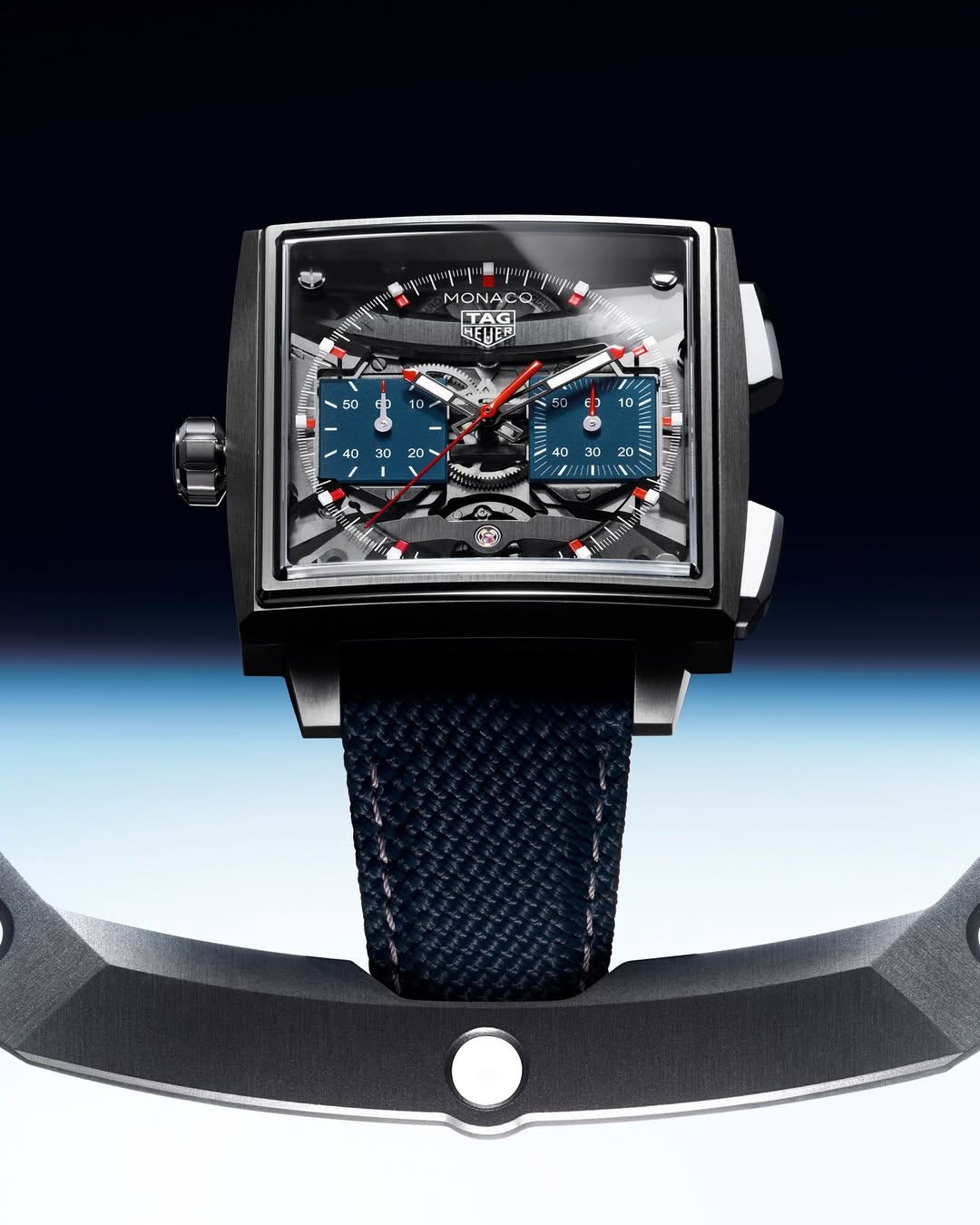
Aesthetically, the Evergraph draws from the Monaco Split-Seconds Chronograph, with an openworked dial and prominent structural bridges. The layout gives central hours, minutes and chronograph seconds, with a small seconds at 9 o'clock and a 60-minute counter at 3.
Two versions are available. The first has a black DLC-coated 40mm titanium case with red accents and black subdials. The second presents the natural dark grey finish of the titanium alongside blue subdials and grey stitching on the rubber strap. Both are immediately distinctive and lean into a more technical, motorsport-inspired aesthetic than the standard Monaco.